
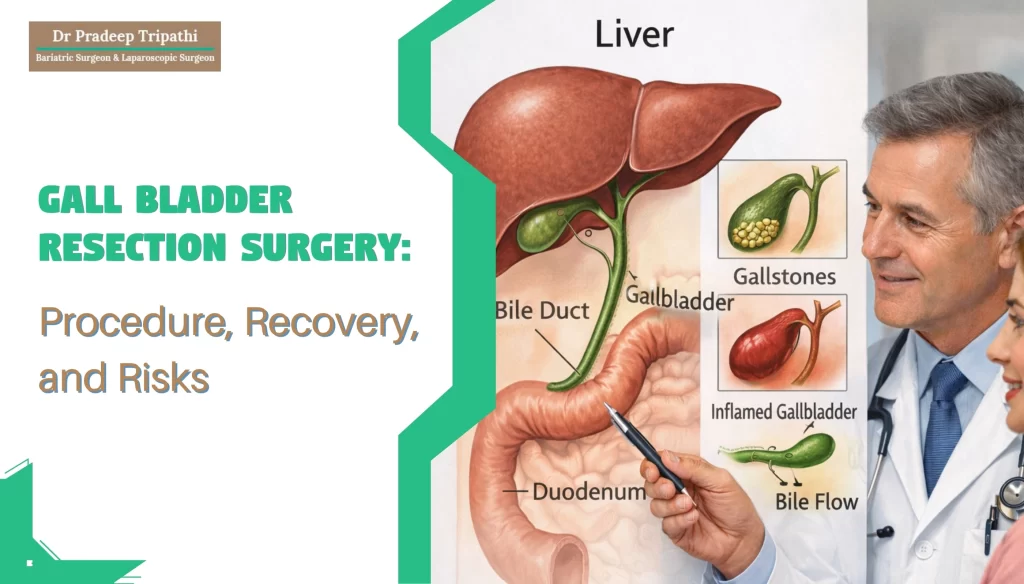
Cholecystectomy or gall bladder resection surgery is ranked as one of the most performed surgeries globally. The surgery is usually suggested when the gall bladder is inflamed, infected, or blocked by gallstones. Untreated gall bladder problems can lead to very intense abdominal pain, nausea, vomiting, jaundice, and even death. Lastly, when patients wish to undertake a safe and reliable treatment, the appointment of an experienced doctor like Dr. Pradeep Tripathi guarantees an accurate diagnosis, advanced care, and fast recovery.
What Is Gall Bladder Resection Surgery?
The gallbladder is a small organ found beneath the liver that stores the bile essential to the digestion of fats. When the bile ducts are blocked by gallstones or when there is an infection, doctors will recommend the surgical removal of the gallbladder. Since the gall bladder is a non-vital organ, patients can still have a completely normal life without it.
Most modern surgeries are done using laparoscopic (minimally invasive) techniques that entail smaller cuts made on the skin, faster healing time, and less pain. However, in exceptional cases, open surgery is the only option due to the severity of infection, the presence of scar tissue, or other complications.
Step-by-Step Procedure
Pre-operative Evaluation:
The surgeon carries out imaging tests like ultrasound, blood tests, and an in-depth physical examination to evaluate the state of the gall bladder.
Anesthesia:
The patient is put under general anesthesia, and this way is completely unconscious during the surgery.
Laparoscopic Technique:
- Multiple small cuts are made in the stomach area.
- A laparoscope (camera) is put inside to see the organs.
- The gall bladder is delicately detached from nearby structures.
- It is taken out through one of the small cuts.
Closure:
The small cuts are either stitched or glued with surgical glue.
Gall Bladder Surgery Recovery
Recovery is usually very smooth and fast, especially in the case of laparoscopic surgery. In most cases, they can either stay at the hospital for a few hours or spend a night there. Some of the most important factors in a patient’s recovery are as follows:
Pain Management: Slight pain is usual but can be kept under control by means of the prescribed drug.
Dietary Changes: The patients are initially given a liquid diet and then low-fat solids.
Physical Activity: Gentle activity may be started after a few days, but heavy exercise and lifting should not be done for 2-3 weeks.
Return to Work: A number of patients go back to work after one week, depending on the type of job.
Dependence on the gall bladder often does not show signs until many years have passed.
Conclusion
Gall bladder removal surgery is a secure and efficient treatment for gallstones and diseases related to the gall bladder. Knowing the surgery, the recovery period, and the possible complications helps the patients to take the right steps regarding their health. If you have a non-stop bellyache or other signs of the presence of stones in your gall bladder, contact a medical expert such as Dr. Pradeep Tripathi for professional evaluation and individualized care.